
Benefits of In-House Legal Software Solutions


Contents
Ever wondered why it takes three weeks to get a simple vendor agreement signed while your Sales VP waits desperately to close the quarter? It is not because your lawyers are slow, but rather because they are fighting a paper fire with a water pistol. Relying on endless email chains creates a severe bottleneck, where the hidden costs of manual contract management pile up and delayed paperwork directly stalls company revenue.
Modern businesses solve this by adopting in-house legal software, transforming the traditional dusty filing room into a high-speed digital engine. This collection of connected tools, commonly known as a "Legal Tech Stack", acts as a tailored digital toolkit designed to automate routine tasks and centralise agreements. According to industry data, organisations that digitise these processes close deals significantly faster than those depending on manual reviews.
Instead of serving as a mere digital storage unit, this technology functions as an active productivity partner. By streamlining corporate legal operations, the right legal workflow software ensures deals get approved in minutes rather than days. Ultimately, equipping your legal department with modern tools empowers the entire organisation to move at the speed of business.
Modern businesses solve this by adopting in-house legal software, transforming the traditional dusty filing room into a high-speed digital engine. This collection of connected tools, commonly known as a "Legal Tech Stack", acts as a tailored digital toolkit designed to automate routine tasks and centralise agreements. According to industry data, organisations that digitise these processes close deals significantly faster than those depending on manual reviews.
Instead of serving as a mere digital storage unit, this technology functions as an active productivity partner. By streamlining corporate legal operations, the right legal workflow software ensures deals get approved in minutes rather than days. Ultimately, equipping your legal department with modern tools empowers the entire organisation to move at the speed of business.
What In-House Software Actually Does
Have you ever hunted through an endless email chain for a lost vendor agreement? That chaos happens when companies rely on simple digital folders instead of a true enterprise legal management platform. Unlike basic cloud drives that just hold files, modern in-house legal software acts as a "Central Source of Truth." This ensures every department, from Sales to Finance, accesses the exact same data, instantly preventing the messy information silos where critical deals often get stuck.
To transform a legal department from a mysterious black box into a business engine, these platforms are built on 4 essential pillars of in-house legal software:
To transform a legal department from a mysterious black box into a business engine, these platforms are built on 4 essential pillars of in-house legal software:

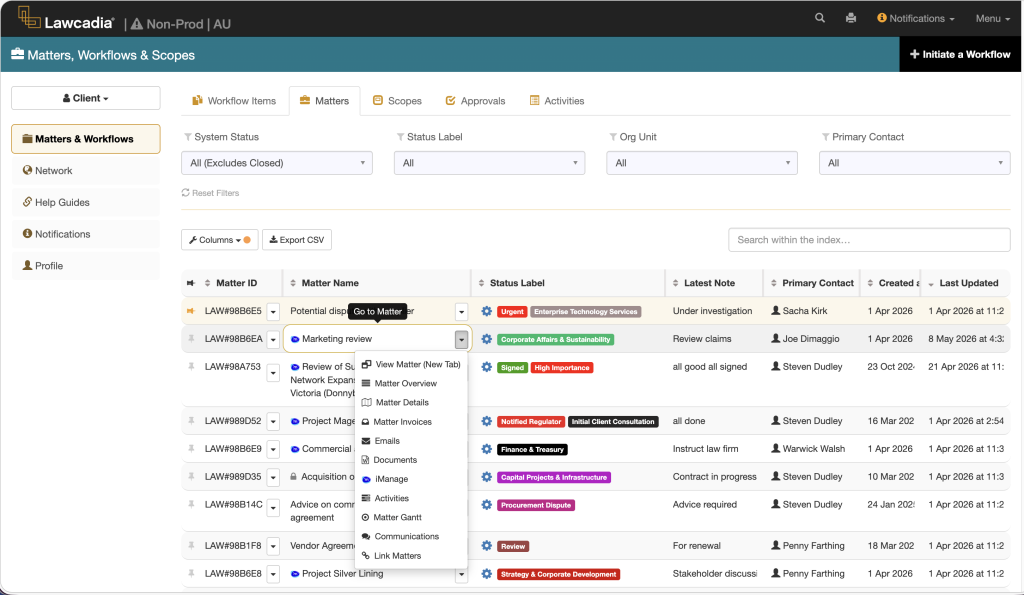
Matter Management: Think of a "matter" as a specific legal project, like a lawsuit or a real estate lease. This tracks every connected task, email, and deadline

Spend Management: A dashboard tracking outside law firm budgets and invoices

Contract Management: The digital assembly line guiding an agreement from start to finish
Compliance: Automated alerts ensuring the business follows current industry rules
Centralising legal document storage across these interconnected areas lets non-lawyers securely check a project's status without constantly emailing the legal team.
Slashing Contract Cycles with Self-Service Tools
Simple non-disclosure agreements often take weeks to approve when legal teams must build agreements from scratch, manually copying and pasting clauses between old files. Modern businesses solve this bottleneck using self-service options for documents and agreements. A system that turns slow drafting into a high-speed digital assembly line.
Instead of waiting days for a lawyer, business departments can now rely on document automation tools. By simply answering a few basic questions about a deal, like the vendor's name and the total dollar amount, a non-lawyer can instantly generate a legally sound, perfectly formatted document. Relying on these pre-approved templates successfully reduces legal review time.
After generating the draft, the focus immediately shifts to execution. Modern cloud-based legal collaboration tools let multiple departments review and approve the exact same file in real-time, completely eliminating confusing email attachments. Allowing sales and procurement teams to securely close deals in minutes.
Speeding up routine agreements is a massive organisational win, but contracts represent only one piece of a corporate legal workload. When massive lawsuits or complex company mergers occur, fast paperwork simply isn't enough to maintain order. Managing these multi-step projects requires a completely different approach to digital organisation.
Instead of waiting days for a lawyer, business departments can now rely on document automation tools. By simply answering a few basic questions about a deal, like the vendor's name and the total dollar amount, a non-lawyer can instantly generate a legally sound, perfectly formatted document. Relying on these pre-approved templates successfully reduces legal review time.
After generating the draft, the focus immediately shifts to execution. Modern cloud-based legal collaboration tools let multiple departments review and approve the exact same file in real-time, completely eliminating confusing email attachments. Allowing sales and procurement teams to securely close deals in minutes.
Speeding up routine agreements is a massive organisational win, but contracts represent only one piece of a corporate legal workload. When massive lawsuits or complex company mergers occur, fast paperwork simply isn't enough to maintain order. Managing these multi-step projects requires a completely different approach to digital organisation.
Matter Management vs. Practice Management
Think of a legal "matter" as a master digital project folder holding every file, email, and task for a specific business event, like a company merger. When organising these complex files, people often assume corporate lawyers use the exact same software as external law firms. That’s a costly mistake.
Traditional law firms rely on practice management tools built primarily to track billable hours and invoice clients. In contrast, corporate teams need in-house legal matter management software to collaborate with other departments and keep projects moving fast.
The matter management vs practice management distinction ultimately comes down to business utility. Proper internal systems offer three key advantages over law firm software:
Traditional law firms rely on practice management tools built primarily to track billable hours and invoice clients. In contrast, corporate teams need in-house legal matter management software to collaborate with other departments and keep projects moving fast.
The matter management vs practice management distinction ultimately comes down to business utility. Proper internal systems offer three key advantages over law firm software:
Corporate Context: Shared access connects legal folders directly to existing company data, eliminating duplicate data entry across departments
ROI Focus: Instead of logging billable time, in-house legal case management software measures internal money saved and corporate risks avoided
Internal Client Service: Managers can instantly check a project's status without waiting on an email from the legal team
Centralising this project chaos gives business leaders complete visibility into the legal department's daily organisational impact. Yet, even highly efficient internal teams must occasionally hire external experts for specialised problems. When utilising external counsel, stringent financial oversight becomes essential to maintain corporate budgets.
How Spend Management Controls Outside Counsel Costs
Receiving a massive, unexpected invoice from an external law firm is a terrifying moment for any department head. Since traditional firms bill by the hour, projects quickly spiral into financial nightmares if firm bills for administrative tasks like photocopying. Modern spend management and e-billing tools act as digital gatekeepers to stop this leak. Instead of someone manually reviewing fifty-page invoices, the software automatically scans every line item, flagging non-compliant charges before the bill is ever paid.
Catching those billing errors early drives the ROI of legal department automation. Instead of waiting thirty days to see the final tally, business leaders get real-time dashboards showing exactly how much money a project is consuming. This prevents end-of-month sticker shock and keeps costly external projects strictly aligned with corporate budgets.
Over time, this software builds a database revealing exactly what different firms charge for similar work. Armed with historical data, companies confidently negotiate fairer rates, effectively reducing outside counsel spend. With external costs optimised, legal teams can redirect their focus toward proactive risk mitigation and internal compliance.
Catching those billing errors early drives the ROI of legal department automation. Instead of waiting thirty days to see the final tally, business leaders get real-time dashboards showing exactly how much money a project is consuming. This prevents end-of-month sticker shock and keeps costly external projects strictly aligned with corporate budgets.
Over time, this software builds a database revealing exactly what different firms charge for similar work. Armed with historical data, companies confidently negotiate fairer rates, effectively reducing outside counsel spend. With external costs optimised, legal teams can redirect their focus toward proactive risk mitigation and internal compliance.
Reducing Risk Without the Manual Audit
Most people think corporate risk only comes from massive lawsuits, but it often starts with a simple forgotten deadline. When a critical vendor contract auto-renews at a higher rate because someone missed an email, the financial damage is real. Modern compliance management software acts as an always-on reminder system, providing a reliable paper trail for audits and sending automated alerts before expensive deadlines hit.
The real magic happens during the drafting phase, thanks to legal workflows. This software actively monitors a checklist of three key risk triggers:
Expiration dates on critical service agreements
Non-standard indemnity clauses
Regulatory filing deadlines that could trigger hefty fines from the government
By catching these issues instantly, the platform protects the organisation while enhancing cross-departmental compliance visibility. Establishing this baseline safety empowers the in-house legal department to shift from a perceived bottleneck to a strategic business partner.
Enhancing Visibility for Sales and HR
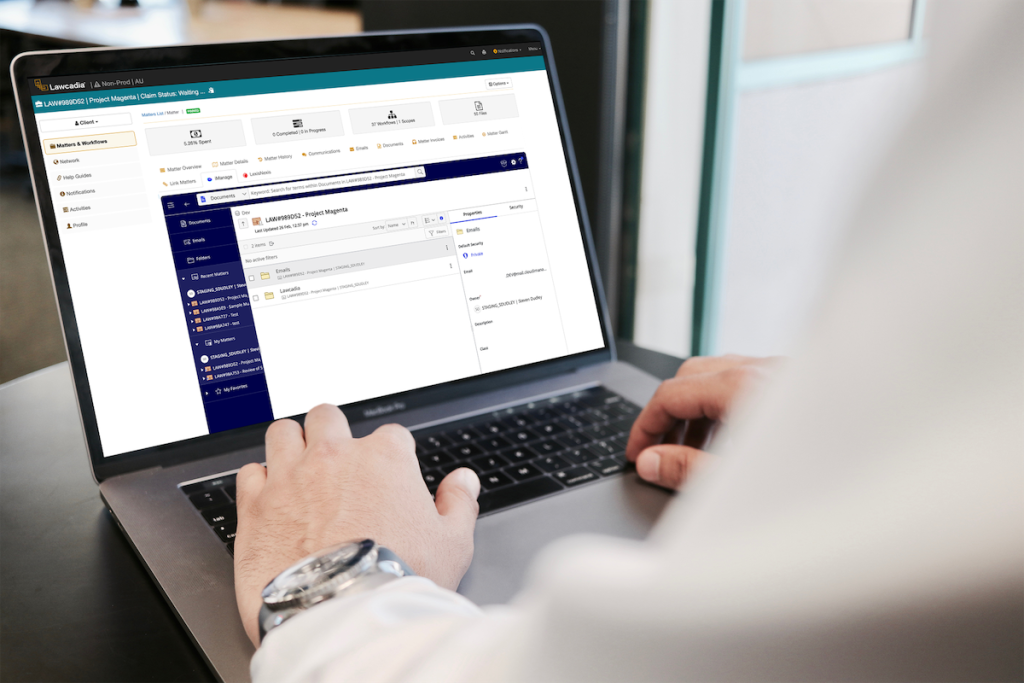
When departments collaborate, the bottleneck is usually legal review. Sales teams need fast approvals to hit quarterly targets, but endless email chains create frustrating delays. The solution is treating legal guidance like an accessible product, a concept called "Legal-as-a-Service." Through a Self-Service Portal—essentially an internal digital storefront—non-lawyers can independently generate pre-approved contracts, entirely eliminating back-and-forth status emails.
Human Resources experiences a similar transformation using document automation. Rather than drafting employment offers manually, HR managers simply answer a few portal questions to instantly generate compliant letters. This cross-departmental value proves why finding the best legal platforms for small departments remains a company-wide priority. Ultimately, successfully implementing legal tech for general counsel removes operational friction for everyone across the organisation.
Shifting to this automated mindset turns the legal team from a perceived roadblock into a strategic business partner. However, successful software implementation requires carefully auditing your organisational pain points before adopting new tools.
Human Resources experiences a similar transformation using document automation. Rather than drafting employment offers manually, HR managers simply answer a few portal questions to instantly generate compliant letters. This cross-departmental value proves why finding the best legal platforms for small departments remains a company-wide priority. Ultimately, successfully implementing legal tech for general counsel removes operational friction for everyone across the organisation.
Shifting to this automated mindset turns the legal team from a perceived roadblock into a strategic business partner. However, successful software implementation requires carefully auditing your organisational pain points before adopting new tools.
Your 90-Day Legal Tech Roadmap: How to Start Small and Scale Fast
You no longer need to view legal workflows as a mysterious bottleneck. When figuring out how to choose a legal management system, start small. Audit your biggest daily frustration and pitch one automated tool to your manager by highlighting the exact hours saved.
This initial win sets the foundation for building a legal technology roadmap. Your legal department isn't a checkpoint where deals slow down; with automation, it becomes a powerful digital engine accelerating your company’s growth.
This initial win sets the foundation for building a legal technology roadmap. Your legal department isn't a checkpoint where deals slow down; with automation, it becomes a powerful digital engine accelerating your company’s growth.