Maximising Efficiency With Legal Operations Software

In-House Legal

Contents

Legal operations software is transforming the way legal teams operate. It streamlines processes and boosts efficiency. This technology integrates various legal software solutions into a single platform. It enhances collaboration and communication within legal teams. Legal operations software offers features like document management and billing. These tools reduce manual tasks and operational costs.

Automation in legal workflows minimises human error. It increases accuracy and speeds up routine tasks. Legal operations platforms provide analytics and reporting tools. These tools support better decision-making and strategic planning. By adopting legal tech solutions, legal teams can stay competitive. They can improve client satisfaction and increase profitability.

What Is Legal Operations Software?

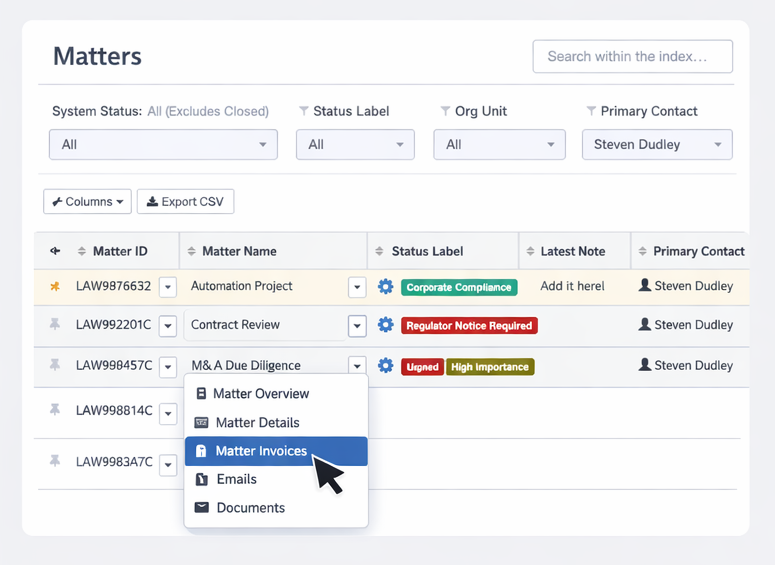
Legal operations software is a comprehensive platform designed to manage in-house legal work efficiently. It integrates various legal tech solutions. These solutions include document handling, matter management, and financial operations. This integration creates a cohesive system for legal professionals. A primary function of legal operations software is to automate routine legal tasks. Automation helps reduce errors and saves valuable time.

Key functionalities of a legal operations platform often include:
Document management and storage
Invoicing
Matter management
Data analytics and reporting
This software can be customised to fit specific needs. It's scalable for both small and large organisations. Centralising operations improves accessibility and collaboration. It allows legal teams to focus on strategic work rather than repetitive tasks.

Key Features of Legal Operations Platforms

Legal operations platforms offer a wide range of features designed to enhance efficiency. These features address diverse aspects of in-house legal team management. One significant feature is secure document management. It organises legal documents, making retrieval quick and easy and keeps documents stored securely.

Financial management is another critical component. The platform simplifies billing and invoicing. This ensures accurate and timely payments. Data analytics tools are integrated for informed decision-making. These tools provide insights into legal processes and identify areas for improvement.

Common features of Legal operations platforms include:
Secure document storage
Automated billing and invoicing
Powerful analytics and reporting
Matter management
Compliance tracking tools
Also notable is the customisation option. Organisations can tailor the platform to their unique needs. This flexibility ensures optimal functionality and outcomes. Workflow automation helps standardise routine processes. It reduces the risk of human error and enhances accuracy. This leads to consistent service delivery.

The inclusion of e-discovery and contract management tools further strengthens the platform’s utility. These tools streamline specific legal tasks, adding significant value.

Benefits of Legal Software Solutions for Legal teams

Legal software solutions offer remarkable benefits to legal teams. These advantages enhance both operational efficiency and client satisfaction. One primary benefit is cost reduction. By automating routine tasks, organisations can minimise manual labour. This leads to lower operational expenses.

Another significant benefit is improved time management. Features like automated scheduling free up valuable time for legal professionals. This allows them to focus on more strategic tasks. Legal software solutions also boost client satisfaction. Faster and more accurate service delivery becomes possible. Internal clients appreciate the responsiveness and precision this software enables.

Key benefits of legal software solutions include:
Reduced operational costs
Enhanced time management
Improved client satisfaction
Increased productivity
Streamlined operations
Scalability is another important advantage. These solutions grow with the organisation. Whether a small or a large legal team, the software adapts to changing needs. Moreover, legal software fosters a competitive edge. Legal teams can leverage technology to stay ahead in a rapidly evolving legal landscape. This ensures long-term success and sustainability.

Legal Workflow Automation: Streamlining Routine Tasks

Legal workflow automation is transforming how legal teams handle routine tasks. Automation reduces the time and effort needed for repetitive processes. One key advantage is the significant reduction in human error. Automated systems process tasks with consistent accuracy. This reliability enhances the quality of work produced.

Automation also accelerates task completion. Routine tasks are completed faster, increasing overall productivity. Legal professionals can then concentrate on high-value activities. Implementing automation in legal workflows brings several benefits:
Minimisation of human error
Faster task completion
Enhanced accuracy
Increased efficiency
Liberation of professional resources
Legal workflow automation also allows for process customisation. Organisations can tailor automated workflows to suit their specific needs. This flexibility ensures that the software supports unique operational requirements.

Moreover, by streamlining processes, automation frees legal professionals to engage in strategic decision-making. This empowers the firm to focus on growth-oriented activities.

Enhancing Collaboration and Communication

Effective collaboration in legal teams is crucial for success. Legal operations software acts as a central hub for communication. This centralisation ensures that all team members are on the same page.

Real-time collaboration tools are essential features within these platforms. They allow seamless sharing of documents and instant updates. This ensures that everyone has access to the latest information.
Legal software solutions offer numerous collaboration-enhancing tools:
Document sharing
Real-time editing
Task assignments
Centralised messaging
Version control
These tools facilitate a more fluid work environment, breaking down traditional silos. Improved communication leads to quicker decision-making and project execution. Legal teams can thus provide better client service and adapt swiftly to changes.
Matter Collaboration

Improving Compliance and Risk Management

Legal operations software plays a critical role in maintaining compliance. It provides tools to monitor and manage legal regulations. This reduces the potential for costly compliance breaches.

Risk management is another vital aspect. The software offers features to identify and mitigate risks promptly. By automating these processes, it minimises human error.

Key compliance and risk management tools include:
Automated compliance tracking
Risk assessment modules
Audit trails
Real-time alerts
These capabilities ensure that organisations adhere to industry standards. They also protect against potential legal liabilities. Ultimately, implementing such software enhances a organisation's ability to maintain a strong compliance framework.

Analytics, Reporting, and Data-Driven Decisions

Legal operations software empowers legal teams with detailed analytics. It transforms raw data into actionable insights. This capability enhances strategic decision-making and improves overall business performance. With comprehensive reporting tools, organisations can monitor key metrics. These tools enable detailed analyses of matter outcomes and financial health. By assessing these reports, leaders can make informed decisions that drive success.

Essential features include:
Customisable dashboards
Predictive analytics
Real-time data visualisation
These tools facilitate data-driven strategies that optimise operations. They ensure that organisations remain competitive in a data-centric landscape. Ultimately, this technology supports proactive management and enhances the organisation's potential.

Integration and Scalability: Future-Proofing Your Legal Team

Integration and scalability are crucial for a thriving legal team. Legal operations software ensures seamless integration with existing systems. This offers a smooth transition to enhanced operations without disruption.

Scalability means the software grows with your team. As your client base expands or your service offerings diversify, the software adjusts. It provides the flexibility needed to adapt to changing requirements.

Key integration benefits include:
Compatibility with current tech stack
Support for future software updates
Simplified data transfer processes
Scalable legal software solutions prepare organisations for future growth. They streamline operations today while paving the way for tomorrow. Through future-proof technology, your legal team remains competitive.

Choosing the Right Legal Operations Software

Selecting the best legal operations software requires careful evaluation. It's important to match software features with your team's specific needs. Consider various factors to make an informed decision.

First, assess your current operational challenges. Determine which software features address these issues effectively. Understanding your pain points ensures the right choice.

When comparing options, prioritise:
User-friendly interface
Customisable features
Implementation and customer support
Finally, request demos or trials. Test the software in real-world scenarios to gauge its effectiveness. This hands-on experience helps in evaluating suitability for your organisation. With thoughtful consideration, the right legal tech solutions enhance efficiency. They ultimately transform your legal team's operations.

Real-World Examples: Legal Tech Solutions in Action

Legal tech solutions are making significant impacts in real-world scenarios. Many legal teams have embraced these technologies to streamline their processes. They are seeing remarkable results in efficiency and service delivery. Consider a mid-sized legal team that integrated legal workflow automation. They experienced a substantial reduction in manual errors. This led to improved client satisfaction and increased productivity.

Key successes include:
Faster document processing
Improved invoice accuracy
Enhanced matter tracking
Such outcomes demonstrate the potential of legal operations software. Organisations leveraging these tools gain a competitive edge in a fast-evolving industry.

Conclusion: Transforming Legal Operations for the Modern Legal Team

Legal operations software is indispensable for modern legal teams seeking efficiency. It transforms traditional practices into streamlined, tech-driven operations. By integrating these advanced solutions, organisations can future-proof their processes.

Embracing legal tech means more than adopting new tools. It involves a shift in mindset towards innovation and adaptability. As the legal landscape evolves, these technologies empower organisations to meet new challenges with confidence. The result is not just increased efficiency but enhanced client satisfaction and competitive advantage.